Podcast: Listen to the Patient!
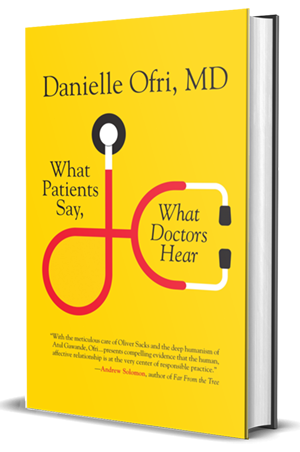
Danielle is interviewed by Joe Elia from the New England Journal of Medicine about her new book, “What Patients Say, What Doctors Hear.” More
“Healing Words” interview
Danielle Ofri interviewed at the Mayo Clinic about writing, healing, and medicine. More
Danielle Ofri discusses Oliver Sacks on NPR’s ‘Science Friday’
Danielle Ofri discusses Oliver Sack’s memoir “On the Move” with Maria Popova and Annie Minoff on NPR’s Science Friday. More
Danielle Ofri on NPR’s ‘Only Human’
Danielle Ofri joins host Mary Harris of “Only Human” to share doctors’ confessions. In this case, Danielle “confesses” what it was like to be a patient. More
Interview about Technology and Medicine
Danielle Ofri talks about how technology is mixing with medicine. Everything from electronic medical records to home fitness monitors to how emotions can dominate even the most advanced technology. More
Radio Interview about emotions in medicine
Danielle Ofri speaks about doctors, patients, and the emotions that flow between…. More
History & Physical podcast series
Danielle Ofri discusses preserving empathy as a medical student, how she started writing, the role of narrative medicine, and the consequences of algorithmic medicine. More
Why Doctors Write
How does writing affect a doctor’s practice of medicine? What are the ethics of writing about patients? Should patients be part of the process? Watch the full program broadcast on WGBH -Boston. More
NYU Stories review of “What Doctors Feel”
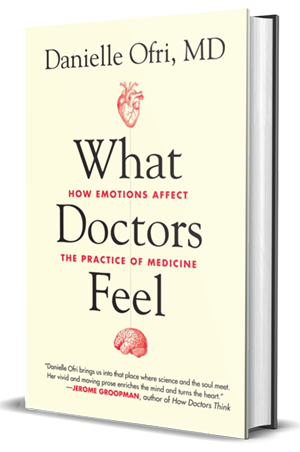
A rare glimpse into the effects of shuttling from patient to patient without being allowed to process the powerful feelings—fear, anger, grief—that naturally arise when lives are at stake. More
BBC Radio
Danielle Ofri is interviewed by BBC News about her book “What Doctors Feel: How Emotions Affect the Practice of Medicine.” (Danielle is a secret BBC groupie, so was especially thrilled to be on this show) More
Writing about Medicine
The hustle and bustle of the hospital leaves clinicians very little time for reflection. Writing is a way to slow down time. Writing allows us to revisit events and give them their due. More
Talking about Medical Errors
Doctors and nurses are petrified of making mistakes. They don’t want to kill their patients! But mistakes are inevitable and it’s critical to have a safe place to talk about and address the emotional aspect of medical errors. More
Hidden Curriculum of Medicine
Why do students lose touch with what drove them into medicine by the third year of school? Danielle Ofri talks about the hidden curriculum of medicine and its effect on students’ empathetic skills. More
Developing Empathy
Developing empathy requires good role models during clinical training. Those role models aren’t just your professors and your attendings. Teachers are everywhere in medicine, if you just keep your eyes open and pay attention. More
The Dirty Secret About Medical Errors
As physicians we see medicine as a science. We think of ourselves as rational, evidence-based practitioners. But we are far less rational than we tell our patients and ourselves that we are. More