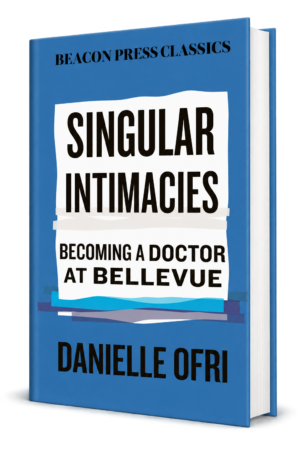
Monday
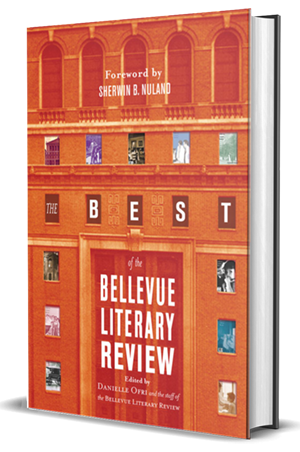
Maybe it was simply human nature that no one wanted to be sick on weekends. Or admit to it. Or do something about it. Whatever the reason, Mondays were always the days of reckoning: weekend walls of denial came crashing down, weekend indiscretions faced their due, weekend warriors paid their price in blood. Admissions poured into the hospital. It was as though the map of Brooklyn had been curled up like a cone and all the human wreckage and misery funneled down to the tip where East Memorial Municipal Hospital sat, as it had for the past century since it opened, with its doors flung widely and indiscriminately open. More
Lemons for Weight Loss
The field of “diet pills” is strewn with lemons. Why do both doctors and patients pretend that it’s lemonade, when it’s been anything but! More
Slow Medicine
I can’t tell you exactly when it happened, but sometime in the past two decades, the “practice of medicine” was insidiously morphed into the “delivery of health care.” If you aren’t sure of the difference between the two, then “God’s Hotel” is the book for you. It’s an engaging book that chronicles this fin-de-siecle phenomenon from the perspective of San Francisco’s Laguna Honda Hospital, the last almshouse in the United States. More
Doctors Have Feelings Too
Doctors should be aware of emotions that may lead them to be less than honest with patients or reluctant to admit errors. More
Who Deserves a Heart Transplant?
One of the most agonizing spots in medicine is the “transplant list.” In the United States, as in many countries, we rely on a simple system of altruism for organ donation. But other countries are trying different approaches. More
Music Teachers for Doctors?
What if every doctor learned from a music teacher? Could a “coach” bring back the intellectual vibrancy from medical-school days for one doctor, the way a music teacher inspires constant growth? More
A Sampler of Danielle’s writing
Want to sample Danielle’s writing? Check out videos, podcasts, and of course, the written word of Danielle’s most memorable stories. More
Americans by Choice
“Enlightened citizenship is the everlasting strength of our democracy.” Inspiration from Andrew Carnegie. More
Filling the Ritalin Rx
Most physicians think little about prescriptions after they hand them off to their patients. But patients can face shame and humiliation when filling a prescription. More
The Provider Will See You Now
When did doctors become “providers?” The term has a deliberate sterility to it that wrings out any sense of humanity, and connotes a widgetlike framework for that which is being “provided.” More
Recertifying Doctors
Seeking to keep pace with the rapid advances in medicine, the American Board of Internal Medicine initiated the “recertification process.” Now, doctors must take an exam every 10 years. More
Doc, How Much Time I Got?
There are few situations more horrible than having to tell another human being that he or she is going to die. And it doesn’t get any easier with experience… More
Pharma in the Jungle
How to make pharmaceutical R&D worthy of James Bond-like drama. It’s not easy, but Anne Patchett gamely tries. An American drug company based in the dull stretches of Minnesota is racing to develop the holy grail of fertility drugs—a simple pill to allow women to get pregnant at any age. The stockholders are rubbing their palms rapaciously at the mere thought. More
Doctors, Patients, and Computers
The presence of computers in the exam room has had another consequence. Both physically and psychologically it has placed a wedge in the doctor-patient relationship. More
Remembering 9/11
On 9/11, doctors and nurses swarmed Bellevue Hospital, ready to help the injured from the twin towers. But we weren’t ready for happened next. More